A paradise for aquatic plants and smaller fish


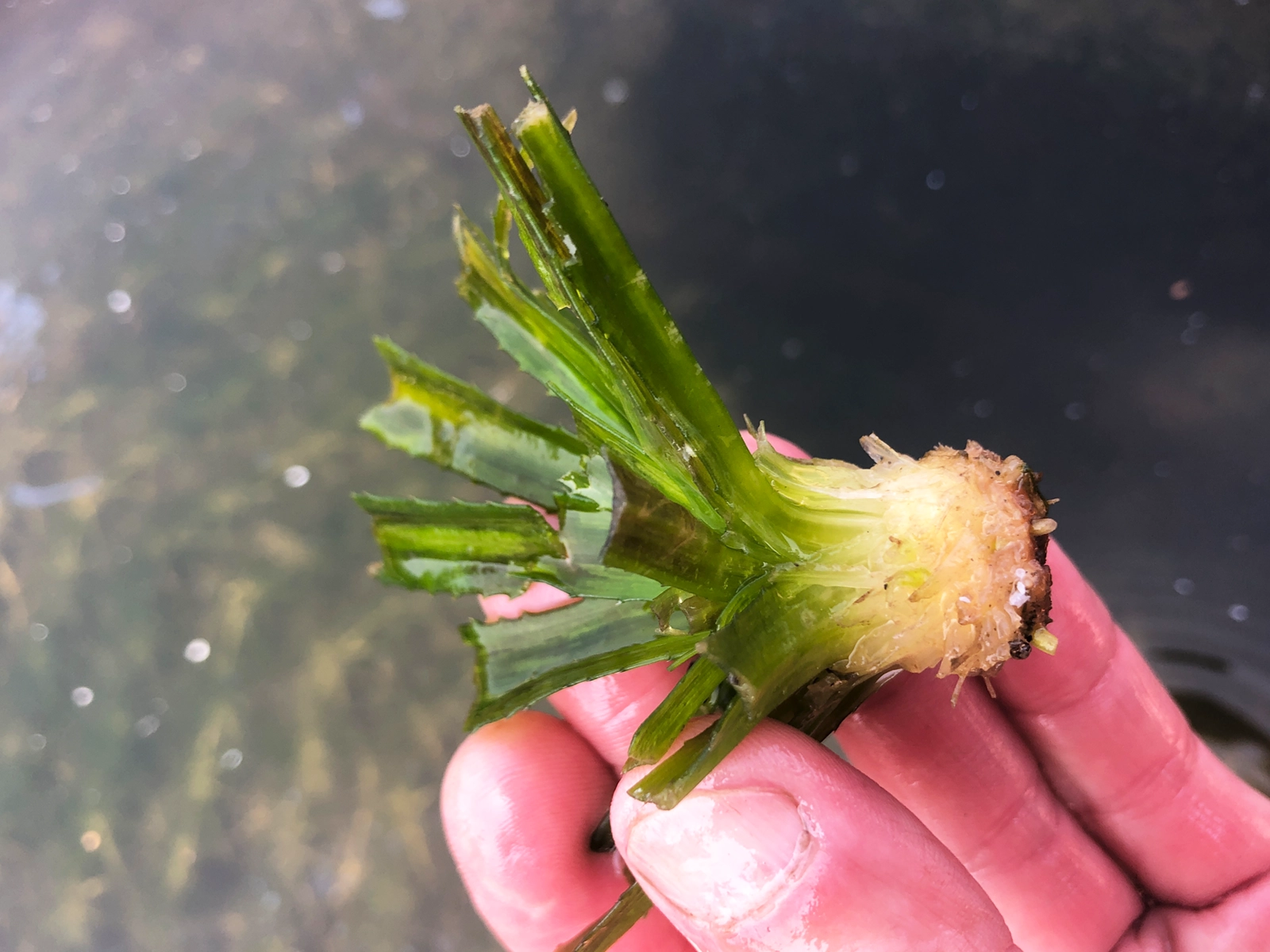
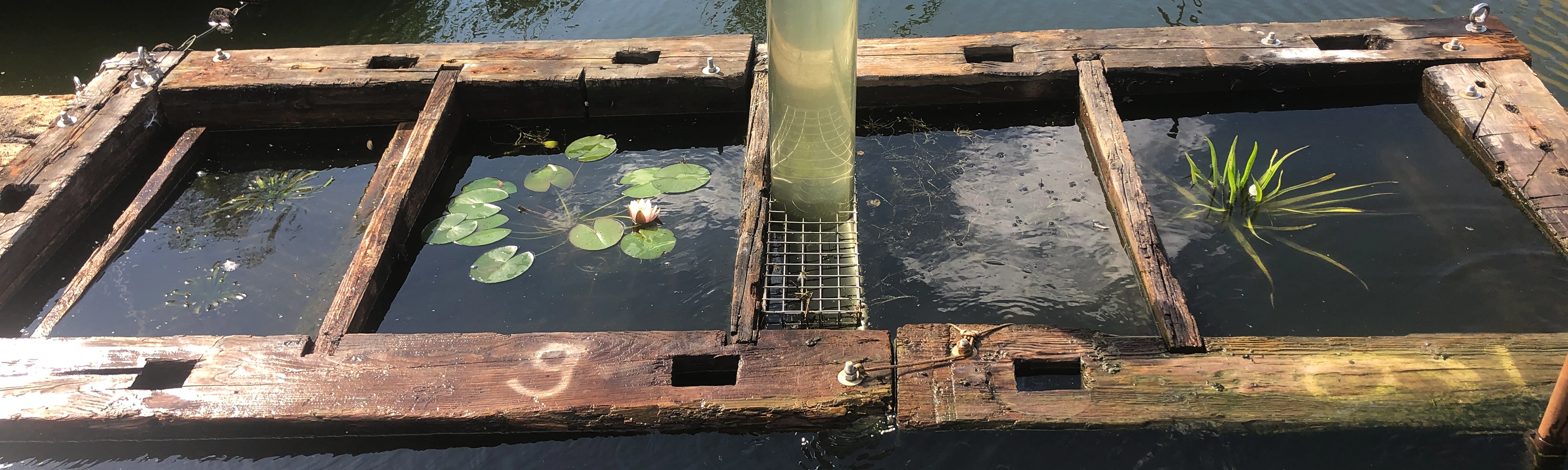
Above water, there are hardly any plants ob e seen in the garden, but underwater there are all the more. The design ensures maximum light penetration for these water and floating-leaf plants that produce oxygen. Here grows Soft Hornwort, Common Stonewort, Perfoliate, Shining and Curly Pondweed Yellow Water-Lily (Nuphar lutea), Spiked Water-Milfoil, Nuttall’s Waterweed Water Soldier, Water Violet, Frogbit, and Common Water-Starwort.
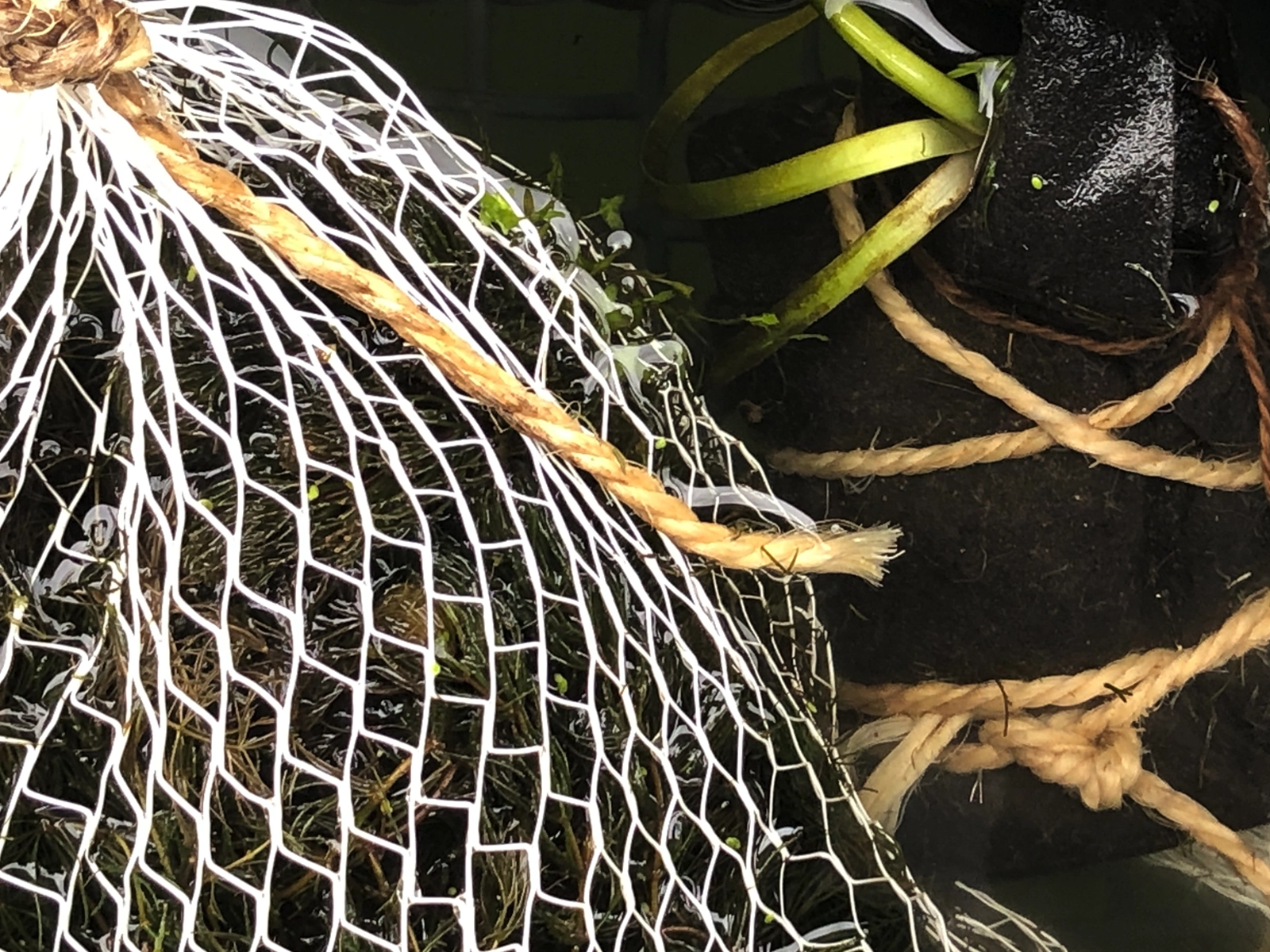
Kees Koot (Stichting Waterplant) and Sara Boschuiver (Waterbaten) advise, assist with planting and supply aquatic plants for this wonderful challenge. Which plants are robust and resilient enough to survive the unfavourable conditions of brackish, turbid, nutrient-rich water, wind and currents in the city? Do the pond basins offer sufficient protection, even during transport? We have placed a number of aquatic plants in a protective mesh bag made of biomolymer BESE mesh to see if this helps prevent grazing and leaching.
A large planter has been made from old floorboards from Amsterdam's canals. This basin has been weighted down with an underwater landscape of brick dust, which prevents pond substrate from being washed away, provides structure for plant roots, and is a favourite adhesive surface for (water-filtering) mussels.
Plantics makes 100% plant-based sheet material from pressed Dutch hemp and a natural resin. This was used to make a triangular plant tub, which was given extra buoyancy by blocks of biofoam made from the same resin.

Nautilus was commissioned by the Waterkaravaan to create a Fish Matryoshka: three gabions nested inside each other, each with smaller mesh sizes. These are planted with aquatic plants. Fish can hide from predators here, between the gabions and among the aquatic plants. You can see lots of small fish swimming around here.
The warmed water in the fish tower attracts fish, which can swim in from below. This makes it possible to encounter fish from a canoe!

In a shallow basin made of canal wood lies a stack of interlocking 3D BESE elements that provide support for aquatic plants. The material chosen for these BESE elements is PHB, which also composts naturally in cold fresh water.
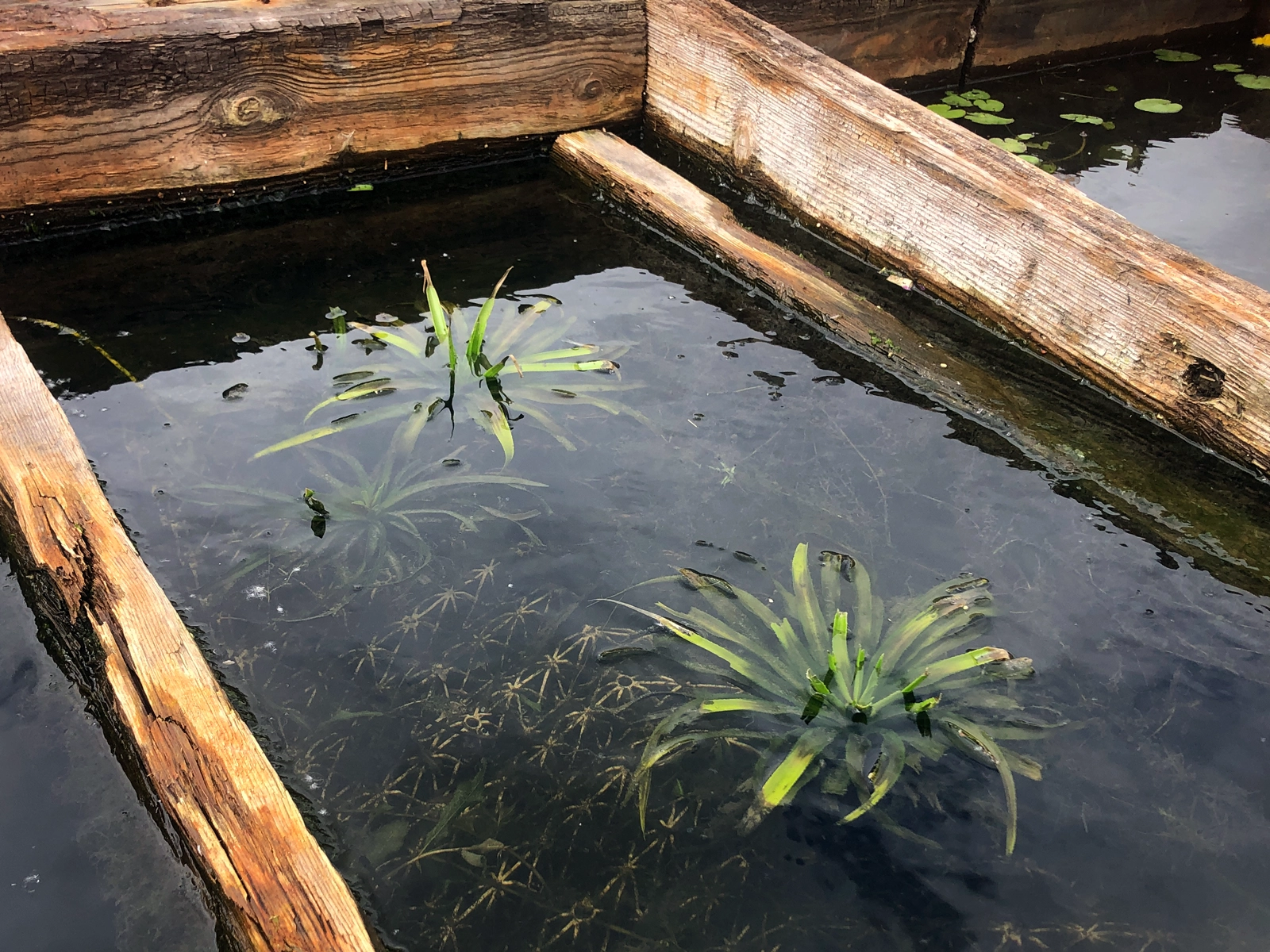
The (rooted) submerged aquatic plants and (rooted) floating-leaf plants are like a feast in a barren desert: they are quickly eaten and stripped bare.